

In today’s fast-changing world, people are seeking guidance through major life changes—whether it’s a career pivot, divorce, relocation, or retirement. That’s where life transition coaches come in: trained professionals who help individuals navigate change with clarity, confidence, and emotional resilience.
If you’re passionate about personal development and want to help others thrive through life’s turning points, this guide will walk you through how to become a life transition coach, step by step. You’ll also discover how tools like the GoodLiife Score App can elevate your impact as a coach.
What Does a Life Transition Coach Do?
Before diving into the steps, it’s important to understand the role. A life transition coach supports clients going through significant life events by helping them:
- Clarify their emotions and goals
- Identify strengths and resources
- Create actionable plans
- Develop emotional resilience
- Maintain momentum through uncertainty
Unlike therapy, life coaching focuses on the present and future rather than unpacking the past. It’s ideal for those ready to move forward but unsure how.
Step 1: Define Your Niche and Motivation
Not all life transition coaches are the same. Reflect on the types of transitions you’re most passionate about helping with:
- Career transitions
- Divorce and relationship changes
- Retirement and aging
- Health or wellness shifts
- Relocation or lifestyle redesign
Choosing a niche not only clarifies your marketing but helps you resonate deeply with your ideal clients.

Step 2: Get Trained and Certified
While coaching isn’t legally regulated in most countries, professional training boosts your credibility and effectiveness.
Recommended Certifications:
- International Coaching Federation (ICF): The gold standard in coaching credentials
- Certified Life Coach Institute: Offers accelerated programs for life coaching foundations
- iPEC or Coach Training Alliance: Both offer holistic and accredited training programs
Make sure your chosen program includes:
- Core coaching principles
- Ethics and best practices
- Live coaching practice and feedback
- Goal setting, mindset, and transition-specific modules
Step 3: Gain Experience and Practice
The best way to build confidence as a coach is by coaching real people—even before launching your business.
Tips:
- Offer free or low-cost sessions during training
- Ask for testimonials and feedback
- Record sessions (with permission) to self-review and improve
- Observe or co-coach with mentors
Practical experience helps you refine your voice, understand real client struggles, and develop effective tools for transition work.
Step 4: Develop Your Coaching Toolkit
Life transitions require emotional intelligence, structure, and goal-setting tools. As you evolve, create or collect resources that support your client process, such as:
- Life audit assessments
- Values clarification exercises
- SMART goal templates
- Weekly accountability forms
This is also where a digital tool like GoodLiife Score comes into play (more on that shortly).
Step 5: Launch Your Coaching Business
With your training complete, it’s time to build your practice. Here’s what you’ll need:
- A coaching website or landing page
- Booking and payment system (e.g., Calendly, Stripe)
- Coaching packages or programs (e.g., 6-session plan)
- Marketing strategy (social media, content, email)
Most coaches start by offering 1:1 sessions and gradually expand into workshops, group coaching, or online courses.
Step 6: Support Clients with GoodLiife Score
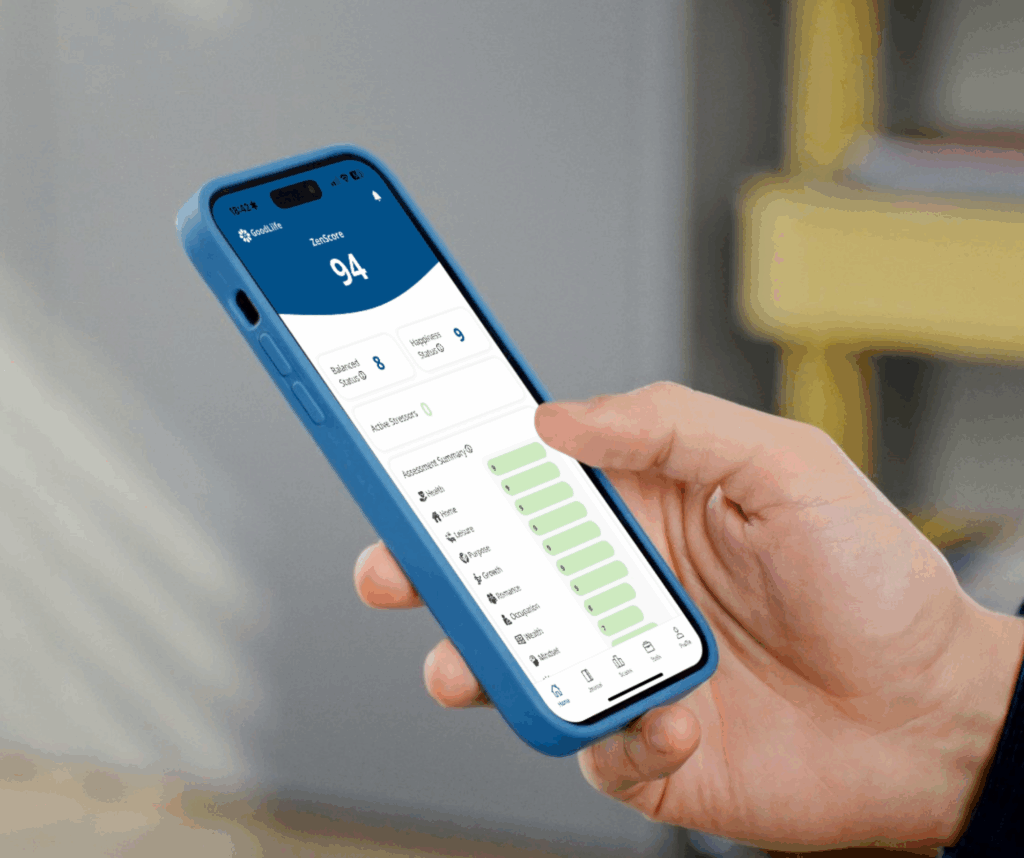
Once you begin working with clients, the GoodLiife Score App becomes a powerful ally—for both coach and client.
Here’s how it helps:
- Track Client Progress: The app gives you real-time insight into your client’s well-being across multiple life areas (emotions, relationships, finances, etc.).
- Goal Monitoring: Clients can set and update goals in-app, making sessions more focused and accountable.
- Visual Feedback: Easy-to-read dashboards show trends over time, helping clients recognize growth even when they feel stuck.
- Data-Driven Coaching: The app empowers you to base your coaching on clear patterns, not just conversations.
In short, GoodLiife Score bridges the gap between sessions, keeping clients mindful, motivated, and making progress on their own.
Step 7: Keep Growing as a Coach
Great coaches never stop learning. Consider:
- Attending coaching conferences
- Joining mastermind groups or supervision circles
- Earning advanced certifications (e.g., trauma-informed coaching)
- Staying updated on trends in wellness, psychology, and habit formation
The more you grow, the more value you bring to your clients—especially those navigating the toughest chapters of life.
Final Thoughts
Knowing how to become a life transition coach is the first step to building a purposeful and rewarding career. By guiding others through life’s uncertain moments, you offer more than advice—you offer transformation.
And with GoodLiife Score App as your digital coaching companion, you can deliver even deeper results, track client progress with ease, and scale your impact.
Ready to guide others through change—and thrive while doing it? Your journey as a life transition coach starts now.