

In today’s ever-evolving world, coaching has become one of the most sought-after professions for those who want to support others in their personal growth, clarity, and purpose. But as coaching niches expand, so does the confusion—especially when comparing a life coach vs life transition coach. While both professionals help clients live more fulfilling lives, they differ in scope, specialization, and coaching strategy.
Whether you’re someone looking to hire a coach or considering a coaching career yourself, understanding these distinctions is key. In this article, we’ll break down the core differences between life coaches and life transition coaches, who each serves, and how tools like GoodLiife Score empower both coaches and clients for lasting impact.
What Is a Life Coach?
A life coach is a professional who works with clients to help them identify goals, overcome obstacles, and create action plans in various areas of life. Life coaches don’t focus on past traumas or mental health issues (that’s the realm of therapy); instead, they focus on the present and future.
Common areas life coaches cover:
- Career development and goal setting
- Time management and productivity
- Confidence building
- Work-life balance
- Relationships and communication
- General motivation and accountability
Think of a life coach as a generalist who supports the client’s overall personal development across multiple areas of life.
What Is a Life Transition Coach?
A life transition coach, on the other hand, specializes in helping clients navigate significant life changes. These transitions may be chosen or forced, exciting or painful—but they all involve emotional and logistical challenges.
Life transition coaches work with clients going through:
- Divorce or breakup
- Retirement or career shift
- Becoming a parent or empty nester
- Relocation or immigration
- Loss or grief
- Major health diagnoses or recovery
These coaches focus on helping clients build resilience, process their emotions, and reimagine life on the other side of change. Their approach is more structured around managing uncertainty and redefining identity during pivotal moments.

Life Coach vs Life Transition Coach: Key Differences
| Criteria | Life Coach | Life Transition Coach |
|---|---|---|
| Focus | General personal development | Specific life transitions |
| Client Goals | Self-improvement, goal achievement | Coping, adapting, reinventing |
| Coaching Style | Motivation and goal-setting | Emotional support and mindset shift |
| Duration | Long-term, broad scope | Short- to mid-term, situational |
| Typical Clients | Anyone seeking growth | People undergoing change |
Understanding this distinction can help clients choose the right type of coach based on where they are in life—and guide aspiring coaches to find a specialty aligned with their strengths and passions.
Which One Should You Work With (or Become)?
If you’re experiencing major upheaval or struggling with change, a life transition coach can help you reorient and rebuild. But if you’re feeling stuck, uninspired, or unclear about goals, a life coach might be the better fit.
For aspiring coaches, ask yourself:
- Do I enjoy helping people with broad, long-term life improvements? → Consider general life coaching.
- Am I more drawn to guiding people through emotional, identity-based challenges? → Life transition coaching may be for you.
How GoodLiife Score Supports Both Coaches and Clients
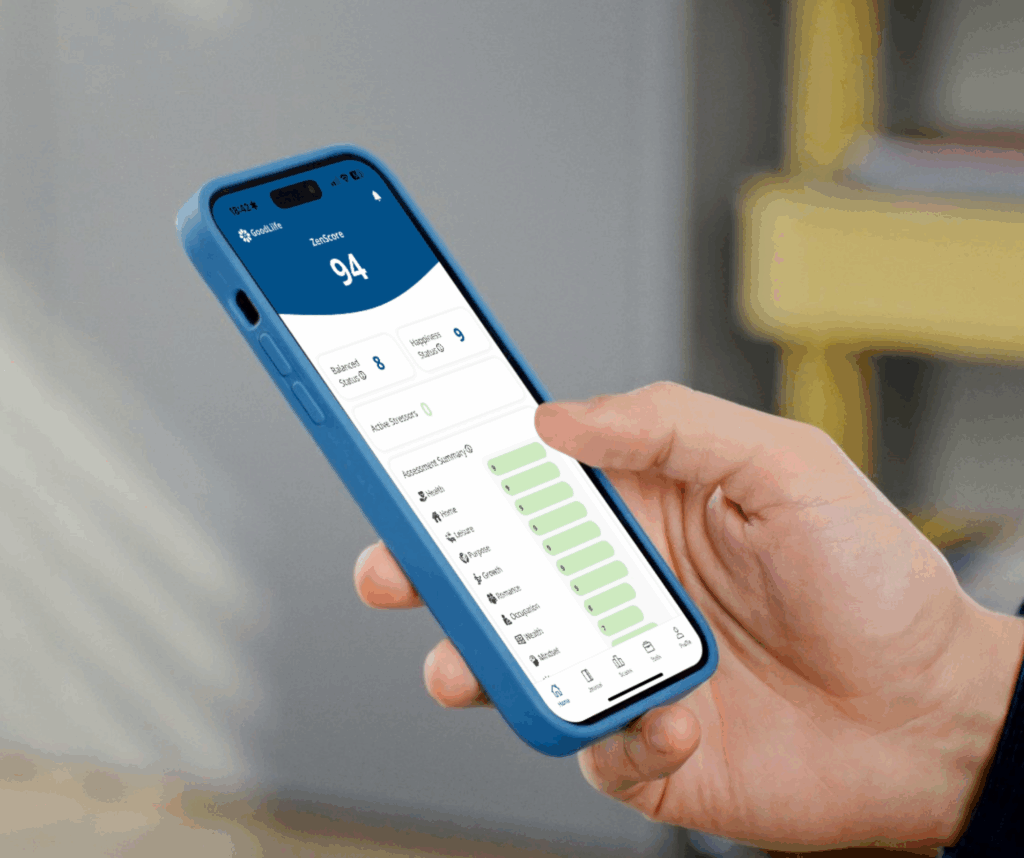
Whether you’re a life coach or life transition coach, the GoodLiife Score app is a powerful tool that enhances your coaching process with data-driven insights, progress tracking, and customized assessments.
Here’s how GoodLiife Score benefits your coaching practice:
✅ Personalized Assessments
GoodLiife Score helps clients reflect on 12 key life domains, including emotional health, purpose, finances, and relationships—giving coaches a clear snapshot of where to start and track growth over time.
✅ Visual Progress
Clients can visually see how their scores evolve, reinforcing progress and building motivation, especially valuable during life transitions when confidence may be low.
✅ Accountability & Clarity
Both life and transition coaches can use the app to set micro-goals, assign reflections, and monitor changes week to week—keeping coaching focused and results-oriented.
✅ Better Outcomes, Faster
By bringing structure and insight into each session, GoodLiife Score makes coaching more effective—clients are more aware, engaged, and empowered.
✅ Coach Differentiation
As the coaching industry grows, GoodLiife Score helps you stand out with a tech-forward approach rooted in behavioral science.
Final Thoughts
When it comes to life coach vs life transition coach, the difference lies in focus and timing. While both roles help clients lead more purposeful lives, life coaches support broad personal development, while life transition coaches specialize in navigating pivotal life changes.
No matter which path you choose—whether as a client or a coach—GoodLiife Score ensures that growth is measurable, meaningful, and sustainable.
What’s Your Life Score?
Start tracking it today with the GoodLiife Score app.