

Life transitions—whether planned or unexpected—can seriously impact your mental health. A new job, the end of a relationship, becoming a parent, or even relocating can trigger anxiety, grief, identity loss, and emotional overwhelm. During these seasons of change, having life transition support for mental health becomes essential—not just for surviving, but for growing through the experience.
While therapy is often a go-to resource for deep psychological healing, life transition coaches play a critical role in helping individuals navigate uncertainty, reduce stress, and regain emotional balance. In this article, we explore how life transition coaching supports mental wellness and how tools like the GoodLiife Score app help track emotional growth and resilience.
The Psychological Toll of Life Transitions
Life transitions disrupt our routines, expectations, and sometimes, our sense of self. These disruptions can lead to:
- Heightened stress and anxiety
- Difficulty making decisions
- Feelings of loss or grief
- Self-doubt and identity confusion
- Isolation and lack of support
Even exciting transitions (like getting married or moving to a dream city) can cause emotional dysregulation. Without the right support, it’s easy to become overwhelmed or stuck in survival mode.

How Life Transition Coaches Support Mental Health
Though they aren’t therapists, life transition coaches are trained to guide clients through emotionally charged periods with empathy, structure, and mindset tools that promote resilience.
Here’s how coaches provide vital life transition support for mental health:
1. Emotional Clarity and Validation
Clients often feel confused about what they’re experiencing. A coach helps normalize the emotional rollercoaster of transition, validate those feelings, and create space for honest self-reflection.
2. Stress Management Techniques
Coaches teach mindfulness, journaling, breathing exercises, and habit restructuring to reduce anxiety and bring clients back to center.
3. Decision-Making Support
When everything feels uncertain, decision fatigue can set in. Coaches help clients get clear on their values, goals, and next steps—cutting through overwhelm and reactivating personal agency.
4. Rebuilding Identity and Confidence
Life transitions often force people to question who they are. Coaches help clients reframe their story, highlight personal strengths, and rebuild self-trust.
5. Practical Life Planning
Emotional stability improves when you have a plan. Coaches help clients structure their new life path—whether it’s setting career goals, defining boundaries, or managing relationships.
Coaching vs Therapy: Where’s the Line?
Life transition coaching is not a replacement for therapy. Coaches do not diagnose or treat clinical conditions like depression, PTSD, or chronic anxiety. However, for clients who are high-functioning but struggling with stress, confusion, or emotional overload, coaching offers future-focused support that complements therapy beautifully.
Many clients actually work with both a coach and a therapist—one for healing the past, and the other for designing the future.
How GoodLiife Score Supports Emotional Tracking and Growth
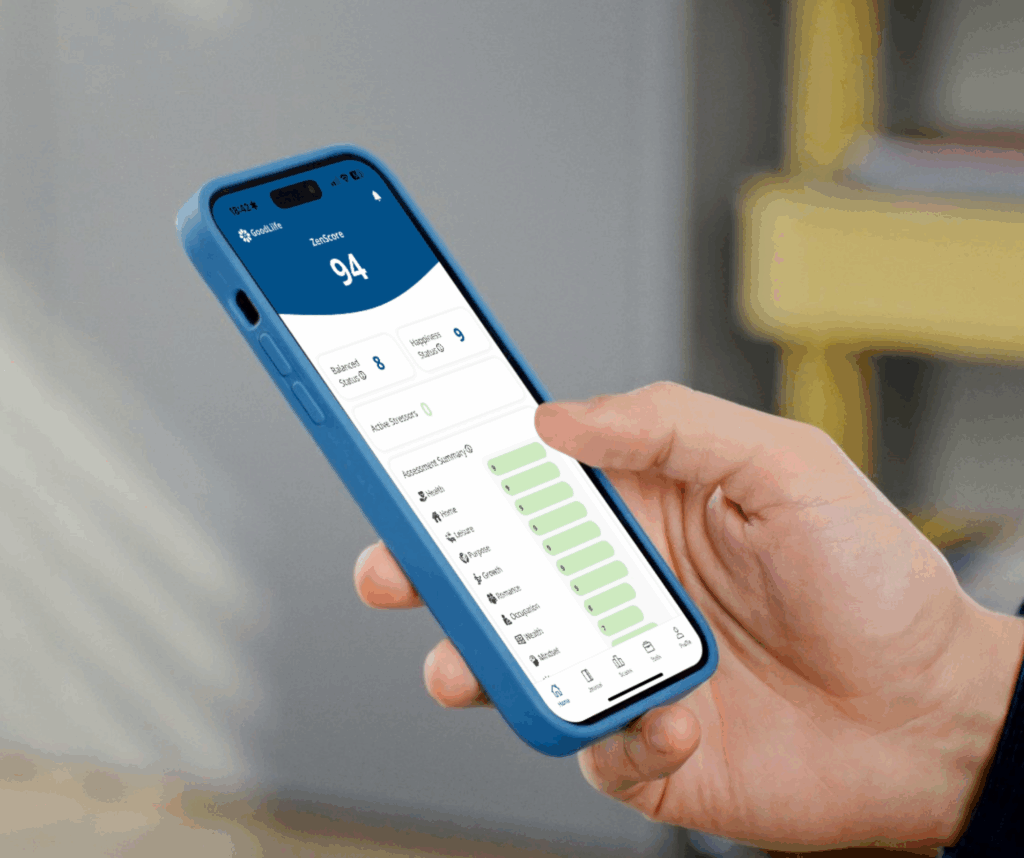
Whether you’re working with a life transition coach or going through change solo, emotional well-being is easiest to manage when it’s visible and trackable. That’s where the GoodLiife Score app comes in.
Here’s how it supports your mental and emotional balance:
✅ Emotional Self-Assessment
The app evaluates your emotional well-being alongside 11 other life categories—like relationships, purpose, health, and finances—giving you a full-spectrum view of how transition is affecting your life.
✅ Mood and Mindset Tracking
You can track how your emotional state shifts week to week. This awareness helps coaches personalize support and helps clients stay grounded through ups and downs.
✅ Visual Progress Builds Confidence
Seeing improvement over time—no matter how small—reassures clients that they’re on the right path and builds motivation to keep going.
✅ Identifies Imbalance Early
By flagging areas of low scores, GoodLiife Score helps both clients and coaches intervene before overwhelm becomes burnout.
✅ Data-Informed Coaching
Coaches can tailor their sessions based on GoodLiife Score results, focusing on areas where support is most needed—such as emotional regulation, confidence, or support systems.
Final Thoughts
Life transitions will always challenge us—but they don’t have to derail our mental health. With the right support, change can become a launchpad for emotional growth and personal evolution.
Life transition coaches play an invaluable role in helping individuals find their footing, manage stress, and reimagine their lives with confidence and calm. And with tools like GoodLiife Score, both coaches and clients gain insight, structure, and emotional visibility every step of the way.
What’s Your Life Score?
Download the GoodLiife Score app and start tracking your emotional well-being today.